
Deciding whether you are ready to apply for judicial office is ultimately your responsibility and should involve more than just assessing your experience, knowledge, and skills.
Being a judicial office holder is challenging and rewarding, with busy courts, varied work, long hours, and significant responsibility. Making judicial decisions can profoundly impact others, so it is important to evaluate your personal readiness to manage the demands of the position. This should include consideration of your having the personal resilience needed to hear, and judge, cases which will by their nature contain very distressing information.
When considering your readiness, reflect on the specific requirements outlined in the About The Roles section of this website. Your questions and concerns will differ depending on the judicial role you are interested in, but the primary focus should be whether you meet the requirements of that role.
First Steps
A good place to start when considering a potential judicial career is to familiarise yourself with the skills and qualities JABS will be looking for from any applicant. For legal roles, these are summarised as follows:
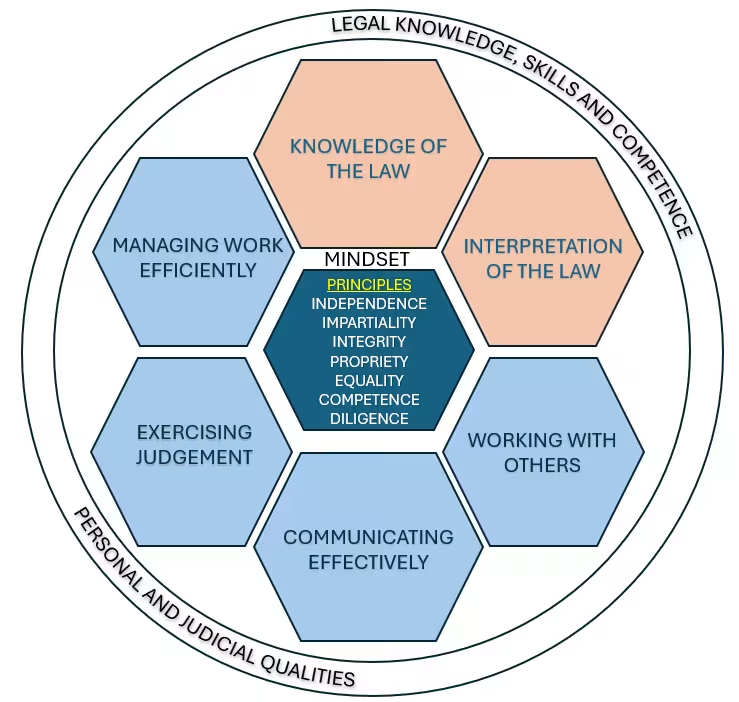
Legal Knowledge, Skills and Competencies
It is important that applicants have confidence in the legal skills and knowledge needed to fulfil the responsibilities of a judicial office holder. You will see below some examples of the legal knowledge required for both court and tribunal roles.
One of the key questions you should ask yourself is “do I feel that I have sufficient knowledge and understanding of the law for the role I’m considering”.
If your background is predominantly in civil law you may want to consider if you have been appearing in a Court regularly dealing with a range of areas of civil litigation of a complexity appropriate to the role you are considering. Have you had any exposure to criminal work, if so, how much exposure have you had? If not, how would you look to acquire knowledge of criminal law?
If you are not a regular Court practitioner, you may want to consider if you have had significant experience in relation to matters of similar complexity to Court litigation. Again, this experience should be relative to the seniority of the office you are considering.
If your background is predominantly criminal, have you regularly been attending Court (at the level for the role you are considering, i.e., Sheriff Court for shrieval roles, or the High Court for Senatorial roles) .
What is the area of substantive law in which you have had a high level of knowledge. What hard evidence can you provide showing your level of experience in that field.
Are you self-aware enough to understand where the gaps are in your legal skills and knowledge and can you show how you have begun to address those gaps.
Some roles, such as Sheriff Principal have specific management responsibilities. Considerd how you can demonstrate that you have the skill, knowledge and experience to manage a large and complex sheriffdom.
For senior roles, such as Senator of the College of justice, you should also consider:
- If principally involved in civil work, in recent years have you appeared regularly and frequently in court on a range of areas of civil litigation such as contract, administrative law or negligence, in demanding circumstances. What level of contact have you had with criminal work at solemn level.
- If principally involved in criminal work in recent years, have you appeared regularly and frequently in court on a range of areas of criminal law in demanding circumstances. What level of contact have you had with areas of civil litigation such as contract, administrative law or negligence.
- Whether principally involved in civil or criminal matters, do you have a high level of legal learning.
- Whether principally involved in civil or criminal matters, can you show evidence that you regularly give written advice or judgments as to the application of law to fact at a level which displays high expertise in at least some of the areas of substantive law most commonly encountered in the Supreme Courts of Scotland.
- What hard evidence can you provide as to how you have begun to address any gaps in the legal knowledge and skills required for this office.
Many of the questions you may ask yourself when considering a Tribunal role will be similar to those for Court roles and will require you to consider if you can demonstrate a knowledge and understanding of the particular area the Chamber you are considering deals with.
If you are applying for a Tribunal legal role, can you demonstrate a full understanding of the area of law relevant to the Chamber you are considering applying for? Tribunals deal with civil matters, so if your experience is predominantly in the criminal sphere, can you demonstrate your understanding of civil law to the level required for the role? Can you show how you will resolve any gaps in your knowledge and understanding of the law relevant to the chamber you are applying for?
Can you demonstrate that you have the skill and experience needed to critically evaluate the credibility of evidence, address inconsistencies and make clear distinctions on points of law?
Personal and Judicial Qualities
Have you considered the personal and judicial attributes being sought for the role you are considering applying for? Can you show how you can demonstrate those attributes?
Have you looked at your career history to date and considered where the gaps in your skills are and considered how, if asked, you would explain how you plan to resolve those gaps?
Have you looked at the personal and judicial qualities the role you are considering lists and considered if you have the skill, knowledge and experience to be able to fully but concisely explain how you meet those qualities?
Specialist Knowledge for Tribunals
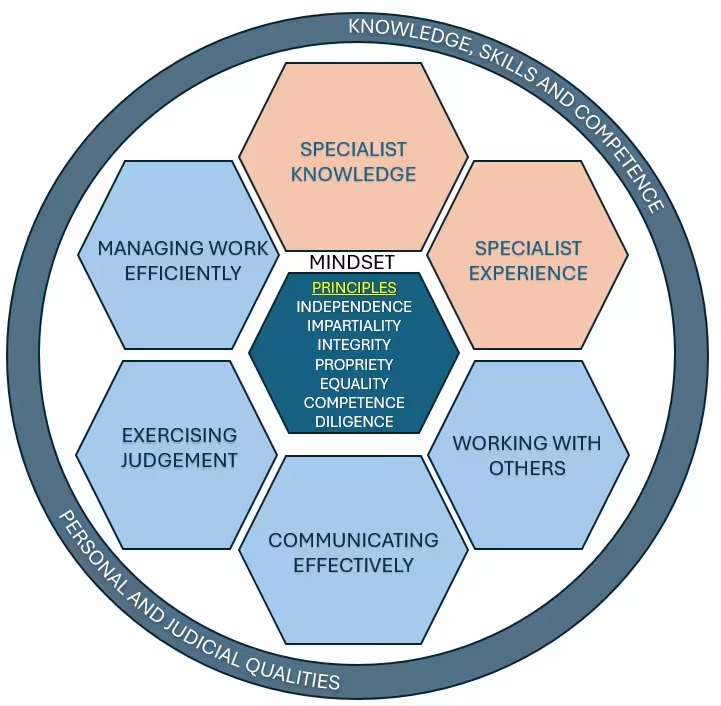
Tribunal Ordinary Member roles frequently look for applicants who have specialist knowledge needed to help tribunals come to fully informed judgements. This may mean for example that the Local Taxation Chamber looks for members with experience of property valuation or surveying or that the Social Security Chamber may look for members with disability experience or medial members. These are just examples, each chamber will have its own specific needs for its Ordinary Members.
Can you demonstrate that you have the expertise and experience needed to be able to make confident decisions in these chambers? Can you speak to your area of expertise sufficiently that your fellow members, including those who will not have that experience, can understand what you are saying?
Other Considerations
Another key question you should ask yourself is “do I have the time I will need to complete a well crafted and comprehensive application?” JABS requests feedback from applicants after every competition, one of the questions asked being how long they spent writing their application and over what duration.
If you are a first-time applicant, you may well be surprised by the responses. On average, a candidate will have spent over 11 hours preparing and submitting their application form, that time being spread over a little under eight days. Remember, these are the averages, so some applicants will have taken considerably longer.
Applying for judicial office is a competitive process. You should spend some time considering if you have the skills, experience and time to adequately express both in your application.
The answer to some of the questions posed above may well be no. That doesn’t mean that your journey to the judiciary is over.
You may have considered your skills, knowledge, experience and personal resilience and concluded that you are not currently ready to apply for a judicial role. Alternatively, you may have concluded that you don’t have the time to dedicate to crafting a full and detailed application which allows you to fully demonstrate your skills and experience.
You can use either as a starting point to work out why you feel you are not ready to apply, to work out where the gaps in your skills and knowledge are and to start planning how you can overcome them so that when a future vacancy occurs, you can re-evaluate your position and say with confidence that you are ready to apply.
Alternatively, you may have read the above and been satisfied that you are ready to apply. That being the case, your next step should be to look at the specific information about the role you are interested in.